
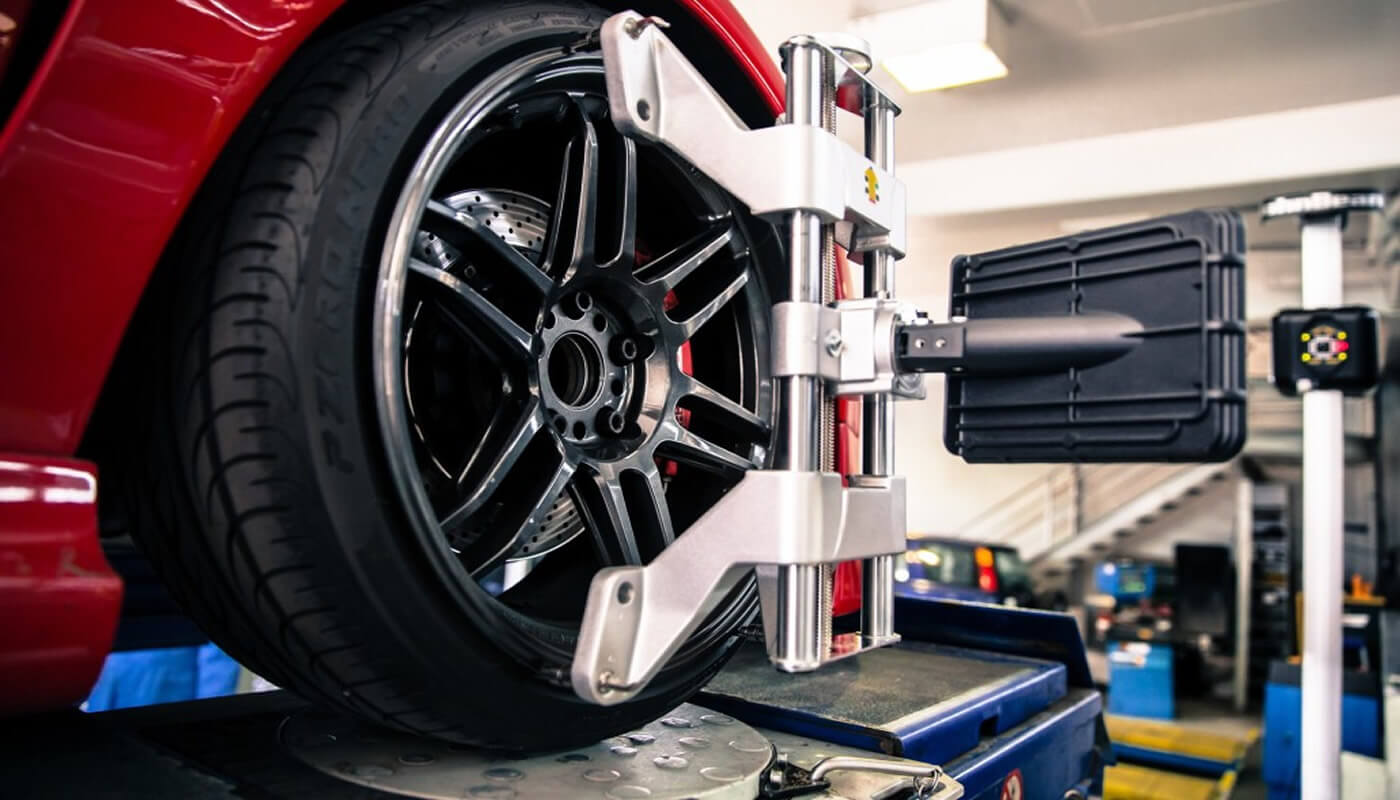
What is vehicle alignment and how often should it be done?
Vehicle alignment is one of the most critical preventative maintenance processes, yet often one of the most overlooked by drivers. It's not just about the steering wheel being "straight," but about a precise geometric configuration that directly affects your wallet and your safety on Ecuador's roads.
What exactly does alignment consist of?
Contrary to popular belief, alignment is not performed on the tires, but on the suspension. It involves adjusting the angles of the wheels so that they are perpendicular to the ground and parallel to each other.
When the angles deviate (due to potholes, hitting curbs, or natural wear and tear of components), the tires no longer roll optimally, causing a drag that wears the rubber unevenly.
The 3 key alignment angles:
-
Camber: The angle of inclination of the wheels when viewed from the front of the car.
-
Caster: Helps with steering stability and the return of the steering wheel after a turn.
-
Toe (Convergence/Divergence): This is the direction the tires point when viewed from above.
How often should a vehicle be aligned?
The standard technical recommendation is to perform alignment every 10,000 kilometers or every 6 months, whichever comes first. However, in cities with uneven terrain or after the rainy season, this interval might be shortened.
You should go to a workshop immediately if you notice these symptoms:
-
The vehicle "pulls" to the left or right when you release the steering wheel on a straight road.
-
The steering wheel is not centered when the car is going straight.
-
Unusual vibrations in the steering.
-
Uneven wear: You notice that a tire is smoother on the inside or outside than on the rest of the tread.
Benefits of proper alignment
A well-aligned vehicle offers a smoother ride, but its main advantages are:
-
Fuel savings: There is less rolling resistance.
-
Durability: Tires can last up to 20% longer.
-
Safety: Improves the vehicle's response to emergency maneuvers.
Mantallanta Commitment
At mantallanta.com, we strive for every customer to have complete purchasing information. This guide is provided transparently because we not only want to sell you the best tire but also help you care for your investment. Our mission is to educate and answer technical questions so that your road experience is always safe and efficient.
2 comments
Jesus Querecuto
Excelente explicación, gracias me sirvió de mucho
Roger Fallas Castro
Cuales serían entonces los ángulos adecuados en un alineamiento?
Muchas gracias